

In a tumble shot blasting machine, parts are kept from damaging each other by the gentle rolling of the flexible rubber belt, the correct fill level and respecting the part weight limit. Together these three points let even delicate parts be blasted without damage.
For fastener and metalworking shops in Poland, Romania and Austria, the right machine and correct loading remove part damage. This article explains part safety in a tumble shot blasting machine and how it differs from the other machines.
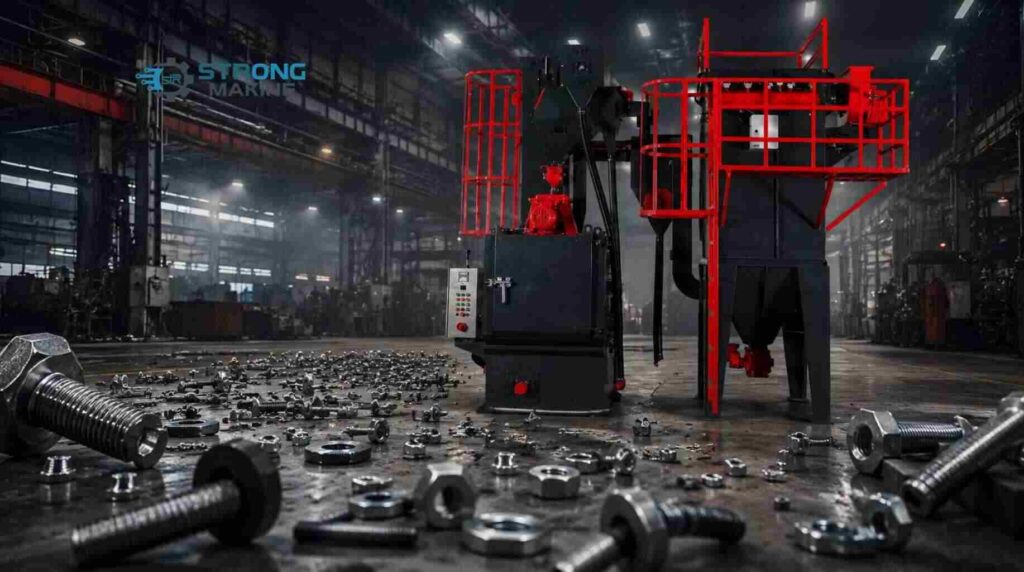
How Does a Tumble Shot Blasting Machine Work?
Short answer: a tumble shot blasting machine loads small parts in bulk into a perforated rubber belt and rolls them slowly while turbines throw abrasive for shot blasting. The gentle rolling exposes every surface to the abrasive evenly.
Parts like bolts, nuts, screws and small castings are processed in batches. The flexible rubber belt is the main element that stops parts from damaging each other or the machine — a key point for high-volume producers in Poland and Romania.
How to Prevent Parts From Damaging Each Other?
Preventing part damage in a tumble shot blasting machine means combining the machine’s design with correct use. The main measures are:
- Flexible rubber belt: A soft rubber surface, not hard metal, absorbs impact and prevents deformation.
- Slow, gentle rolling: The belt rolls parts gently rather than throwing them, reducing impact.
- Correct fill level: An overfilled belt jams parts; an underfilled one lets them bounce. Balanced loading is essential.
- Part weight limit: Respecting limits such as 4 kg for LTK-100 and 8 kg for LTK-300 prevents heavy-part damage.
- Batch similar parts: Not mixing heavy and delicate parts stops collision damage.
How Does a Hanger Shot Blasting Machine Prevent Part Contact?
A hanger shot blasting machine works so that parts never touch each other. Large, complex parts are hung one by one on a Y- or I-type monorail, so part-to-part contact is removed from the start.
This makes the hanger shot blasting machine the choice for large, delicate parts that must be processed singly. The tumble shot blasting machine, by contrast, suits small parts in high volume — common in Romanian and Austrian automotive supply.
How Does a Sheet and Profile Shot Blasting Machine Prevent Damage?
A sheet and profile shot blasting machine moves material in a single layer on a conveyor, so parts do not touch. Large sheets and profiles are processed in a flat flow rather than side by side.
This continuous flow removes the damage risk for long, large parts. So all three machines protect parts by a different method; the right choice depends on the part type and is a frequent question for Austrian steel fabricators.
| Machine | Part Layout | Contact Risk | Protection |
|---|---|---|---|
| Tumble | Bulk / loose | Yes (managed) | Flexible rubber belt |
| Hanger | Hung separately | None | Parts hung apart |
| Sheet & profile | Single layer | None | Flat conveyor flow |
As shown, the tumble shot blasting machine manages contact with a flexible belt, while the hanger and sheet and profile shot blasting machine keep parts from ever touching.
What to Watch For to Prevent Part Damage?
Once the right machine is chosen, a few usage rules remove damage completely:
- Part-machine match: Part size and weight must suit the chosen belt capacity.
- Deformation-prone parts: Keep the fill low for parts with thin edges or screw threads.
- Cycle time: Over-long blasting can erode the surface and wear the part.
| Correct Loading, Damage-Free BlastingIn a tumble shot blasting machine, the most common cause of part damage is incorrect loading. Overfilling the drum jams the parts, and mixing dissimilar parts lets a heavy part strike a delicate one. Respecting the part weight limit of the Strong Makine LTK series (4 kg for LTK-100, 8 kg for LTK-300) and the correct fill level keeps blasting damage-free for shops in Poland, Romania and Austria. |
Frequently Asked Questions
Which parts suit a tumble shot blasting machine?
Small and medium parts such as bolts, nuts, screws, washers and small castings. The flexible rubber belt lets these parts be processed without damage.
Why is the belt made of rubber?
Rubber absorbs impact better than hard metal and prevents part deformation. Its perforated structure also lets the abrasive filter through for reuse.
Can an overfilled belt damage parts?
Yes. An overfilled belt jams parts and blasts them unevenly. The correct fill level prevents damage and keeps cleaning quality.
Hanger or tumble shot blasting machine — which should I choose?
Choose a hanger shot blasting machine for large parts processed singly, and a tumble shot blasting machine for small parts in high volume.
Can delicate parts be blasted safely in the belt?
Yes. With correct fill, a suitable weight limit and batching similar parts, delicate parts are blasted safely.
People Also Ask – PAA
Does a tumble shot blasting machine scratch parts?
Used correctly it does not; the flexible rubber belt and gentle rolling minimize surface scratching.
Do threaded parts deform in the belt?
If the fill level is kept low and similar parts are batched, screw threads are protected.
Does blast time affect part damage?
Yes, an over-long cycle can erode the surface; cycle time should be set to the part.
About the Author
This content was prepared by the STR Strong Makine engineering team. Founded in 2023 on its founders’ roughly 20 years of surface-treatment experience, Strong Makine handles project design and technical support across its hanger shot blasting, tumble shot blasting and sheet & profile shot blasting machine families, serving industrial clients including those in Poland, Romania and Austria.
If you enjoyed our article titled “How to Prevent Parts From Damaging Each Other in a Tumble Shot Blasting Machine?“, visit our News page for more content.
Contact us for information about Strong Makina.