

Quick Summary
The most common abrasives used in a hanger shot blasting machine are steel shot and steel grit. Because these machines are turbine-driven (centrifugal), metallic abrasives deliver the most efficient results, so non-metallic media such as glass bead or garnet are not preferred in this type of machine.
Choosing the right abrasive depends on the part material, the required surface cleanliness, and the coating profile you need. This article explains which abrasive is used in the Strong Makine hanger shot blasting machine, the tumble shot blasting machine, and the sheet and profile shot blasting machine.
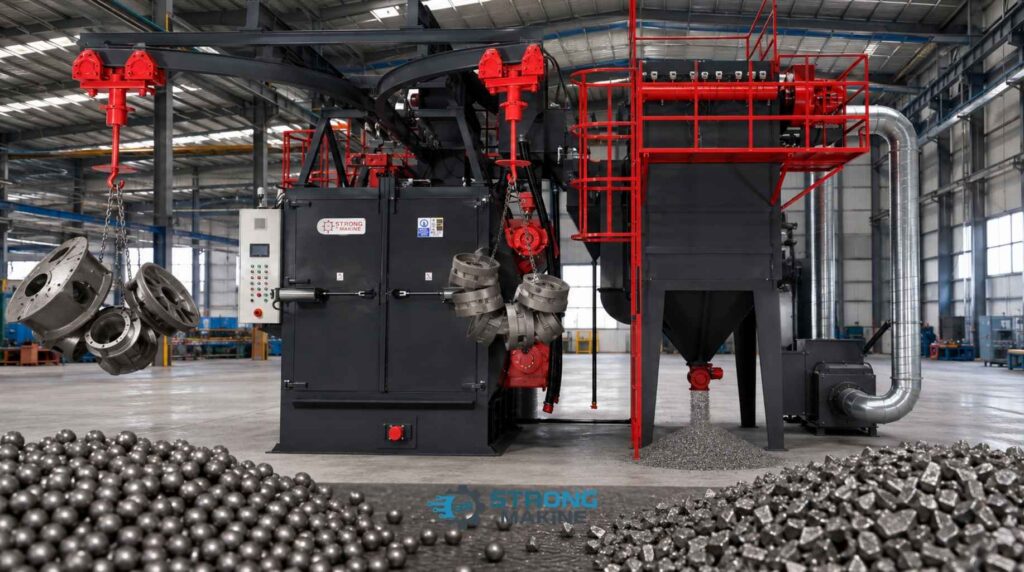
Which Abrasive Is Used in a Hanger Shot Blasting Machine?
A hanger shot blasting machine works by throwing metallic abrasives at high velocity from its turbines. The two most common choices are steel shot and steel grit, because the closed recovery system inside these machines can recycle metallic abrasive through many cycles.
Non-metallic media (garnet, glass bead, aluminium oxide) fracture quickly on the turbine blades and are not economical. For this reason, metallic abrasive is the standard in every hanger type shot blasting machine used by steel and foundry plants in Poland, Romania, and Austria.
Steel Shot vs. Steel Grit: Which One to Use?
In a hanger shot blasting machine, the two abrasives give different results. The short answer: use steel shot for cleaning and light peening, and steel grit for removing tight scale and creating a sharp coating profile.
- Steel shot (S series): Round grain, less aggressive; it cleans the surface and lightly work-hardens it (shot peening effect). It has a longer media life.
- Steel grit (G series): Angular, sharp grain; it removes tight scale and rust and creates a sharp anchor profile for coating adhesion.
The table below summarizes the main differences:
| Criterion | Steel Shot | Steel Grit |
|---|---|---|
| Grain shape | Round | Angular / sharp |
| Main effect | Cleaning + peening | Aggressive removal + profile |
| Surface profile | Low, rounded | High, sharp |
| Media life | Longer | Shorter |
| Ideal use | General cleaning | Pre-coating profile |
Factors That Affect Abrasive Selection
When selecting the abrasive for a hanger shot blasting machine, the following factors decide which media a hanger shot blasting machine should run:
- Part material: Steel and cast parts use steel shot or grit. For non-ferrous parts such as aluminium, stainless steel or zinc/aluminium-based abrasive is preferred to avoid ferrous contamination and rust staining.
- Desired result: Do you only need cleaning, or a defined profile before painting? This determines shot vs grit.
- Abrasive size: Finer grains give a smoother finish; coarser grains work faster and deeper.
- Peening requirement: For parts where fatigue strength matters, round steel shot is used.
Which Abrasive Is Used in a Tumble Shot Blasting Machine?
A tumble shot blasting machine is used for small, bulk parts such as bolts, nuts, and small castings. These machines usually run finer steel shot; the round grain cleans the threads and edges of delicate parts without damaging them.
As the parts tumble gently inside the belt, each one is exposed to the abrasive for an equal time. Fine grit can also be used when descaling is required, but the grain size is kept low to prevent part deformation. This makes the tumble shot blasting machine popular in fastener plants across Romania and Poland.
Which Abrasive Is Used in a Sheet and Profile Shot Blasting Machine?
A sheet and profile shot blasting machine prepares large steel plates, I/H profiles, and structural steel before painting — common work in the steel construction and shipbuilding sectors of Austria, Poland, and Romania. These conveyor-type (continuous) machines mostly use a working mix of steel shot and grit; shot provides fast cleaning and grit provides a sharp profile.
The usual target is Sa 2.5 cleanliness. However, one common mistake is worth flagging: Sa 2.5 is a surface cleanliness grade, not a roughness (profile) value.
| The Facts About Sa 2.5Sa 2.5 is a surface cleanliness grade defined in ISO 8501-1 and describes a “near-white metal” finish. Surface roughness (profile) is assessed separately, under ISO 8503. The two are frequently confused; for correct coating adhesion, both cleanliness grade and roughness must be evaluated separately. |
Frequently Asked Questions – FAQ
Can glass bead be used in a hanger shot blasting machine?
Glass bead is not recommended in turbine-driven hanger shot blasting machines; it breaks down quickly on the blades and is not economical. Glass bead is mostly used in pneumatic (air) blasting systems.How many times can steel shot be reused?
How many times can steel shot be reused?
Thanks to the hanger shot blasting machine’s recovery system, steel shot can be reused for many cycles. Grains that break down over time are removed by the separator, while the system keeps a stable working mix.
Which abrasive is used for aluminium parts?
For aluminium and non-ferrous parts, stainless steel shot or zinc/aluminium-based abrasive is preferred to avoid rust staining. Standard carbon steel shot can cause ferrous contamination.
How does abrasive size affect the surface profile?
Coarser abrasive creates a deeper, sharper profile; finer abrasive gives a smoother surface. In a hanger shot blasting machine, grain size is chosen according to the profile required by the coating system.
Is steel grit always better than steel shot?
Neither is absolutely better; it depends on the need. Grit suits aggressive removal and profiling, while shot suits cleaning and peening. Most sheet and profile lines use a mix of both.
People Also Ask – PAA
How often should blasting abrasive be renewed?
Abrasive is not fully replaced at once; it is topped up continuously. The system removes broken grains and adds new ones to keep a stable working mix.
Why does steel shot hardness matter?
The hardness of the abrasive affects both the cleaning speed and the wear life. Harder grains cut a profile faster but can break down sooner depending on conditions.
Which standards classify blasting abrasives?
Metallic abrasives are generally classified under sizing standards such as SAE J444 and specifications like ISO 11124, which define grain size and type.
About this content
Author: STR Strong Makine Technical Team. Strong Makine is a shot blasting machine manufacturer founded in 2023 by a team combining around 20 years of sector experience. It produces hanger , tumble, and sheet-and-profile shot blasting machines and handles engineering, installation, and after-sales support with its own staff, serving customers in Poland, Romania, and Austria.
Sources: “Abrasive blasting” — Wikipedia (en.wikipedia.org), and SAE J444 / ISO 11124 standards for metallic abrasive classification. For an abrasive matched to your part and surface target, contact the Strong Makine team.
If you enjoyed our article titled “Which Abrasive Is Used in a Suspended Hanger Shot Blasting Machine?“, visit our News page for more content.
Contact us for information about Strong Makina.