

When to Replace Blast Wheel Blades in Tumblast Equipment
Wear Analysis and Performance Management in Industrial Turbines
Positioned at the core of the surface treatment process, the blast wheel blades are the most critical wear-prone consumables in high-velocity shot blasting operations. Although high-durability turbine systems engineered by Strong Makine minimize wear, proactive inspections and timely interventions are mandatory to avoid catastrophic failure. Worn blades distort the weight balance, causing severe shaft vibrations that can destroy motor bearings.
Blade Replacement Frequency and Failure Parameters
The replacement interval for blast wheel blades in a tumble shot blasting machine depends directly on the abrasive media type, total operational hours, and projection velocity. Industry standards dictate that blades must be physically inspected every 100 to 300 operating hours. When a blade’s profile thickness is reduced by 50%, it marks the absolute technical limit for replacement.
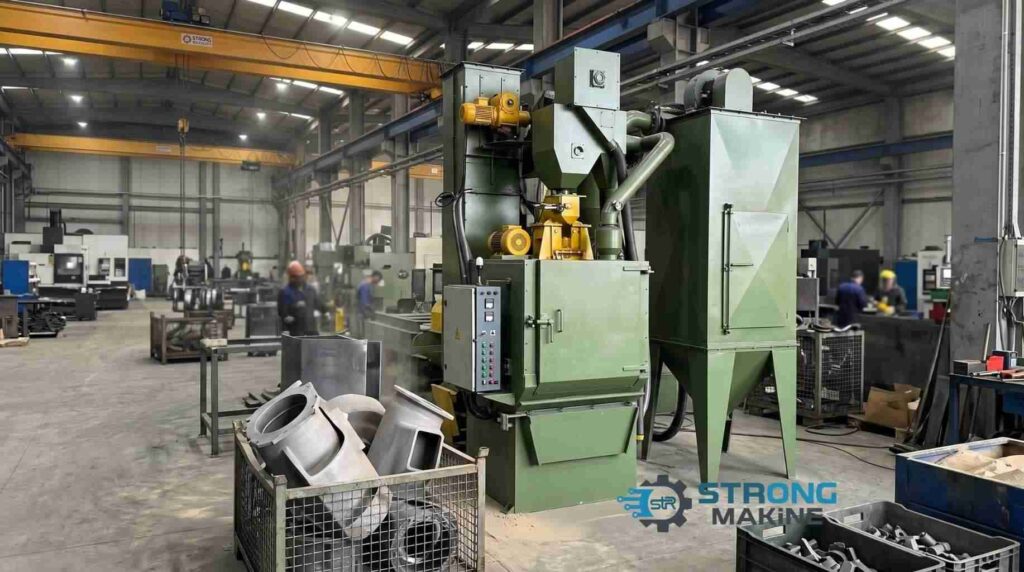
Critical Factors Accelerating Blade Degradation
Abrasive Selection and Duty Cycle
- Angular Steel Grit: Projects a significantly more aggressive wear pattern on the blade surface compared to spherical steel shot, shortening the operational lifespan.
- Multi-Shift Production: For facilities operating on double or triple shifts, blade wear monitoring must be integrated into daily preventative maintenance checklists.
Control Cage and Impeller Alignment
- Misaligned Hot Spot: If the control cage directing the abrasive stream is improperly calibrated, the blades experience uneven impact loading, leading to localized tracking and premature failure.
Most Debated Topic in Industry Forums: Why Replacing a Single Blade Destroys the Blast Wheel Assembly
On global metallurgy and casting maintenance forums, a recurring debate centers on the costly mistake of replacing only one or two cracked or heavily worn blades from a set of eight to save on component costs. Veteran plant engineers voice a strict consensus:
“Blast wheels rotate at high speeds around 3000 RPM. Introducing a single brand-new, full-weight blade into a partially worn set induces an immediate mass imbalance. Under intense centrifugal force, this imbalance creates severe harmonic vibrations that will shear the main shaft or shatter the housing within hours. To save a few dollars on blades, you end up destroying the entire motor assembly. Always replace blades as a complete weight-matched set.”
To mitigate this destructive operational risk, Strong Makine supplies only precision-balanced, weight-matched premium alloy blade sets to ensure vibration-free runtime.
Frequently Asked Questions (F.A.Q)
What are the symptoms of worn blast wheel blades?
The primary indicators include abnormal machine housing vibrations, an extended blast cycle time, a noticeable drop in surface descaling efficiency, and visible deep grooving or micro-cracks on the blade faces.
Is it acceptable to replace only the broken blade in a shot blaster?
Absolutely not. To maintain the exact dynamic balance of the high-speed turbine wheel, blades must always be replaced as a complete balanced set. Single-item replacements cause shaft runout and permanent motor damage.
How can I extend the working lifespan of my blast wheel blades?
Ensure the air-wash separator is correctly adjusted to remove fine dust and crushed abrasive residues, maintain proper control cage timing, and use high-grade, conditioned steel shot.
If you enjoyed our article titled “How Often Should You Replace the Blast Wheel Blades in a Tumblast Machine?“, visit our News page for more content.
Contact us for information about Strong Makina.